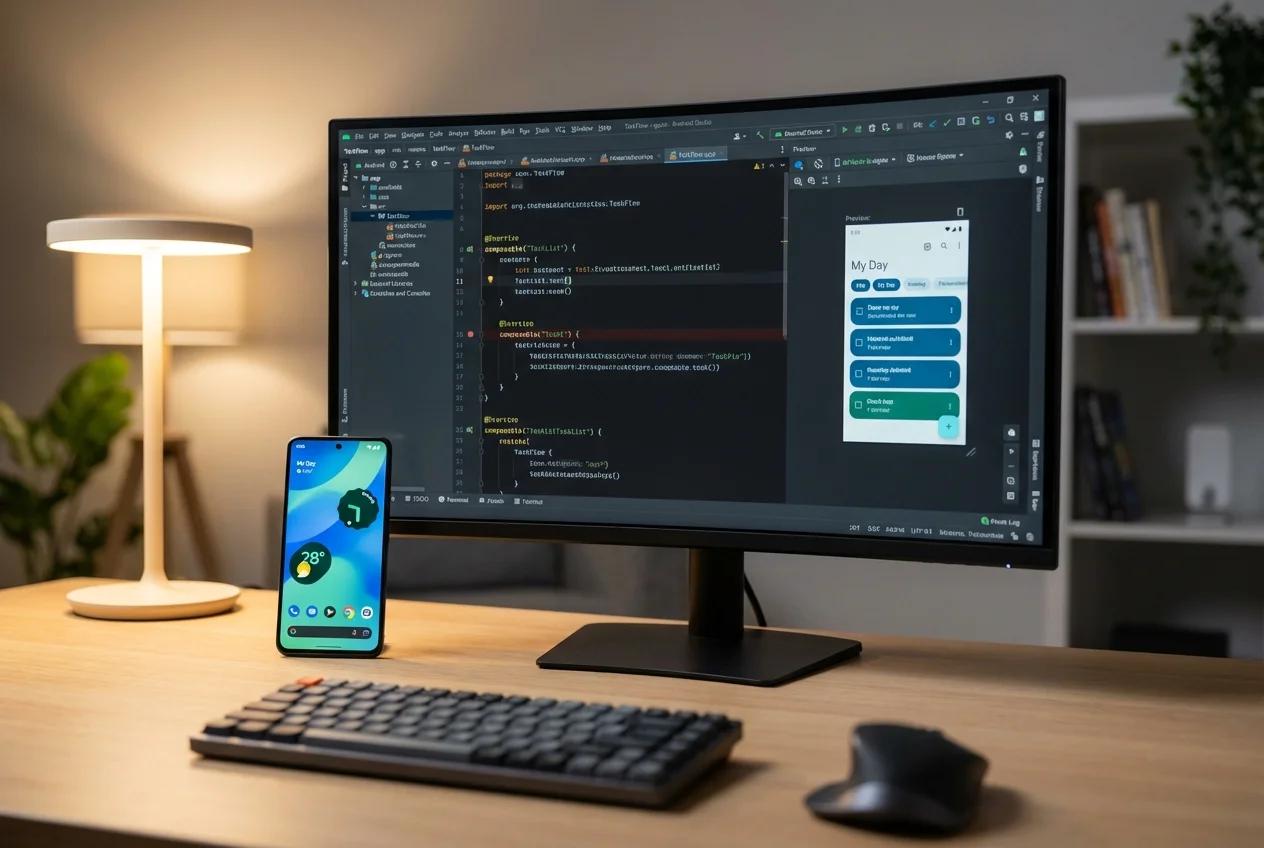
MVP App Development: How Startups Can Launch an App Without Overspending
Launching a mobile app can be an exciting step for a startup, but it can also involve significant investment, complex technical decisions, and uncertainty about what customers actually want.
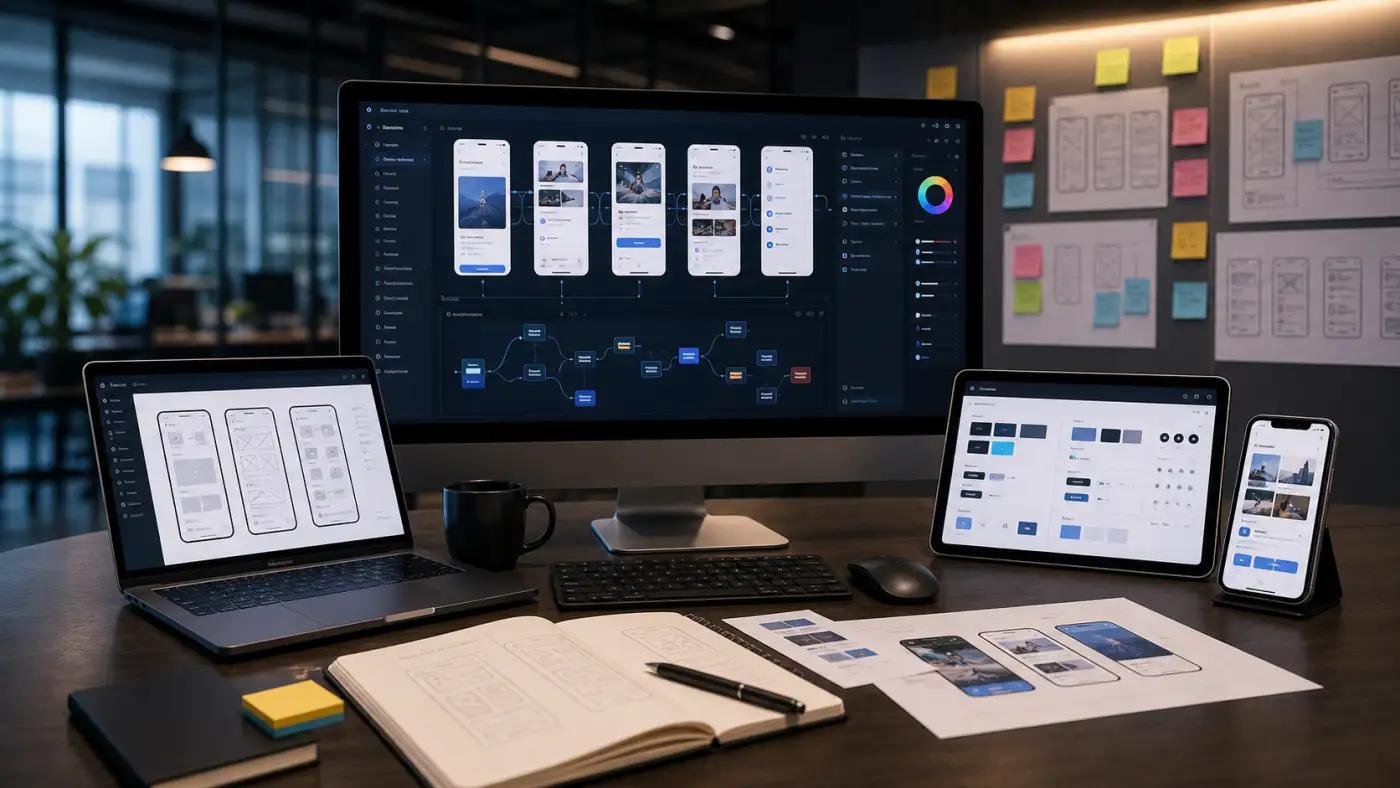
Many founders begin with a long list of features they would like to include. They may plan user accounts, payment gateways, chat functionality, notifications, analytics, dashboards, and several other capabilities before speaking to potential users.
The challenge is that an idea that looks promising on paper does not always solve a real customer problem.
This is where MVP app development can help. Instead of building a fully featured application immediately, startups can begin with a smaller, usable product that addresses their main customer problem. They can launch, gather feedback, and use what they learn to decide what to build next.
In this guide, we explain what a minimum viable product (MVP) is, how it works, which features to prioritize, what affects the cost, and how to choose the right development approach for your startup.
What Is MVP App Development?
MVP stands for Minimum Viable Product. In mobile app development, an MVP is an early version of an application that includes enough functionality to solve a specific user problem and collect meaningful feedback from real users.
The objective is not simply to build the cheapest possible application. It is to create a focused product that can test important assumptions about your business idea.
For example, imagine you want to build a home-service booking app. Your long-term vision may include real-time tracking, subscriptions, loyalty points, multiple payment options, AI-based recommendations, and advanced analytics.
Your first version might only need:
-
Customer registration and login
-
A list of available services
-
Service booking
-
Booking confirmation and status updates
-
A simple administrative dashboard
These features may be sufficient to test whether customers want to book services through your app and whether your business can deliver those services effectively.
Additional features can be introduced after you understand how users interact with the initial product.
Why Should Startups Consider MVP App Development?
1. Validate your business idea before scaling
A business idea may sound attractive, but actual customer behavior is more informative than assumptions.
An MVP allows you to test whether people understand your product, find it useful, and are willing to use it. Feedback from early users can reveal problems that may not be obvious during planning.
This helps you make better decisions before committing to a larger development project.
2. Focus your budget on essential features
Every additional feature can introduce more development, design, testing, and maintenance work.
Starting with a smaller scope helps you concentrate your initial budget on the features most closely connected to your main business objective.
However, an MVP still needs appropriate security, testing, and a reliable technical foundation. Cutting essential quality measures simply to reduce the initial price can create expensive problems later.
3. Reach early users sooner
A focused product generally has fewer features to design and implement than a complex application with a broad feature set.
With clear requirements and an agreed scope, a development team can often deliver an MVP sooner than a full-scale product. The actual timeline depends on complexity, integrations, design requirements, and the availability of the people involved.
An earlier launch gives you an opportunity to begin learning from real usage.
4. Make decisions using real feedback
Early users may interact with your app differently from what you expected.
They might repeatedly use one feature while ignoring another. They may struggle with registration or request a capability that was not part of the original plan.
Usage data, interviews, support requests, and customer feedback can help you decide which improvements deserve priority.
5. Build a roadmap around evidence
An MVP provides a practical starting point for future development. Instead of implementing every planned feature at once, you can prioritize improvements based on user needs, business goals, and available resources.
This creates a more informed path toward a larger product.
What Features Should Your Startup's MVP Include?
The right feature set depends on the problem your application solves. There is no universal feature list that works for every startup.
A useful starting point is to separate features into three categories.
Essential features
These are necessary for a user to complete the application's main task.
Examples include:
-
Account creation or a suitable guest experience
-
The core service, booking, purchasing, or content functionality
-
Essential user information and status updates
-
Basic error handling and support options
-
An administrative interface when your business needs one
Important but deferrable features
These may improve convenience but are not always required to validate the central idea.
Examples include:
-
Multiple social login options
-
Advanced filtering and personalization
-
Loyalty programs
-
Referral rewards
-
Additional payment methods
-
Extensive reporting and analytics dashboards
Some features may be essential in particular business models, so assess each one against your actual requirements.
Features to consider after validation
These are often better suited to later stages unless they are central to the product's unique value.
Examples include:
-
Complex AI-powered recommendations
-
Advanced automation
-
Multiple subscription tiers
-
Large-scale integrations
-
Gamification systems
-
Sophisticated business intelligence
A practical rule: If removing a feature does not prevent users from experiencing the main value of your product, consider postponing it.
MVP App Development Process: Step by Step
A structured process helps prevent unnecessary features, unclear expectations, and avoidable rework.
Step 1: Define the problem you want to solve
Start by identifying your target users and the specific problem your app will address.
Ask yourself:
-
Who will use this application?
-
What problem do they experience today?
-
How do they currently solve it?
-
Why would they choose your solution?
-
What would make the first version useful?
Your answers should form the foundation of your product requirements.
Step 2: Research your target audience
Speak with potential users and examine existing alternatives. You do not need a large research project to begin learning.
A small number of thoughtful conversations can help you identify recurring problems, expectations, and concerns. Competitor research can also reveal common features and potential opportunities to differentiate your product.
Avoid assuming that every feature offered by a competitor must be included in your first version.
Step 3: Prioritize features
Create a list of possible features and evaluate each one based on user value, business importance, effort, and risk.
A simple prioritization method is:
-
Must have: Required for the main user journey.
-
Should have: Valuable but not necessary for the first launch.
-
Could have: Useful enhancements for a later release.
-
Not now: Features that do not support the current validation goal.
This helps establish a realistic initial scope.
Step 4: Plan the user experience and interface
Map the main user journey before development begins.
For example, a booking app may follow this sequence:
-
User opens the app.
-
User selects a service.
-
User enters the required details.
-
User confirms the booking.
-
User receives confirmation.
-
The business manages the request.
Wireframes and interface prototypes help you identify confusing steps before they become part of the finished application.
Step 5: Choose the right technology
The technology should support your product requirements, budget, development team, integrations, and future plans.
Depending on your use case, you might choose native Android development, native iOS development, or a cross-platform framework.
Also consider the backend, database, APIs, hosting, security, and administrative tools. A mobile application often depends on these components to work reliably.
The best technology is not necessarily the newest or most popular option. It is the option that fits your product and can be maintained effectively.
Step 6: Develop and test the MVP
Development should follow the agreed requirements and include testing throughout the process.
Important areas include:
-
Core functionality and user journeys
-
Performance on supported devices
-
Login and access permissions
-
API and database behavior
-
Input validation and error handling
-
Data protection and security
-
Usability and accessibility where applicable
Testing early helps identify issues before they affect a larger number of users.
Step 7: Launch to a suitable group of users
Depending on the product, you might start with a controlled pilot, invited users, a beta release, or a public launch.
Explain what the first version does and provide a simple way for users to report issues or share suggestions.
A launch is not the end of MVP development. It begins the process of learning from actual usage.
Step 8: Measure, learn, and improve
Define success metrics before launching. These could include completed bookings, successful purchases, user activation, repeat usage, or the percentage of users who complete a key task.
The right metrics depend on your business model.
Review the results and prioritize changes based on evidence. Continue developing features when they address demonstrated user needs or support a clear business objective.
How Much Does MVP App Development Cost?
There is no single price for MVP app development. The cost depends on the type of application, the number and complexity of features, the chosen technology, design requirements, integrations, and the development team's rates.
A simple prototype is different from a production-ready application that handles customer accounts, payments, sensitive information, and operational workflows.
When requesting a quote, ask developers to explain what is included rather than comparing prices alone.
Factors that influence the cost
Application complexity: A basic information or directory app generally requires less work than a marketplace or on-demand service platform.
Platform choice: Android, iOS, or cross-platform development can affect the development effort and testing requirements. Cross-platform development may allow code reuse, but it does not eliminate all platform-specific work.
UI/UX design: Custom interfaces, complex user journeys, and extensive prototyping can add to the design effort.
Backend development: Accounts, databases, APIs, admin dashboards, notifications, and business logic may be substantial parts of the project.
Third-party integrations: Payment gateways, maps, messaging, analytics, and external services can require additional implementation and ongoing fees.
Security and testing: Authentication, access control, secure data handling, device testing, and quality assurance are important parts of a production-ready MVP.
Ongoing maintenance: Hosting, monitoring, bug fixes, operating-system updates, security updates, and future improvements should be considered in your budget.
How to manage your initial budget
To keep the project focused:
-
Document the main problem and target audience.
-
Agree on a clearly defined first-release feature list.
-
Separate essential features from future enhancements.
-
Ask for a milestone-based estimate with explicit deliverables.
-
Clarify who owns the source code, design files, and related assets.
-
Discuss hosting, third-party charges, maintenance, and post-launch support.
-
Keep a contingency for unexpected technical or business requirements.
A good estimate should explain assumptions, exclusions, dependencies, and payment milestones. Avoid choosing a provider based on an unusually low headline price without understanding the deliverables.
Native vs Cross-Platform Development for an MVP
Choosing a development approach early can help you plan resources more effectively.
Native development
Native apps are built specifically for a platform, typically using its recommended programming languages and tools.
Native development may be suitable when your app requires platform-specific capabilities, demanding performance, or deep integration with device features.
The trade-off is that building and maintaining separate Android and iOS implementations may require additional effort.
Cross-platform development
Cross-platform frameworks allow developers to reuse a portion of the codebase across Android and iOS.
This can be useful when a startup wants to serve users on both platforms while managing development effort. The result still requires platform-specific testing and may need native components for particular capabilities.
Which approach is right for your startup?
Choose based on your target audience, required device capabilities, expected user experience, available budget, and maintenance plan.
A qualified development team can assess these requirements before recommending a technology stack.
Common MVP Development Mistakes to Avoid
Building too many features
Trying to create a complete product before testing the main idea can increase cost and delay learning.
Better approach: Focus on the smallest product that can test your most important assumptions.
Skipping user research
Building entirely from assumptions can result in a product that solves the wrong problem.
Better approach: Talk to potential users and validate the main user journey before committing to a large scope.
Treating an MVP as a low-quality product
An MVP should have limited scope, not careless implementation. A confusing interface, unreliable functionality, or poor data protection can undermine user trust.
Better approach: Keep the feature set small while maintaining suitable quality, security, and reliability.
Ignoring the business model
An app may attract interest without generating sustainable revenue or supporting the intended business process.
Better approach: Define how the product creates value and how you will evaluate whether the business model is working.
Failing to plan for maintenance
Even a small application needs ongoing attention after launch.
Better approach: Plan for monitoring, updates, support, backups where appropriate, and a realistic maintenance budget.
Measuring downloads instead of meaningful outcomes
Downloads alone do not show whether an application solves the intended problem.
Better approach: Track actions that matter to your business, such as completed transactions, repeat use, or successful service requests.
How to Choose an MVP App Development Company
A development partner should help you make sound product decisions, not simply implement a long list of requirements.
Before selecting a company, consider the following:
-
Discovery and planning: Can the team help clarify requirements and identify the essential first-release features?
-
Relevant experience: Can it demonstrate projects with similar technical or business requirements?
-
Transparent estimates: Are deliverables, milestones, exclusions, and dependencies clearly explained?
-
Communication: Will you receive regular updates and have a clear point of contact?
-
Quality assurance: Is testing included in the development process?
-
Ownership: Are source-code ownership, access to repositories, and delivery of project assets clearly documented?
-
Post-launch support: Is there a defined approach to maintenance, bug fixes, and future enhancements?
-
Scalability: Can the proposed architecture support a sensible growth path without unnecessary complexity today?
Ask for a written proposal and compare the scope and delivery approach, not just the final price.
Turn Your App Idea Into a Practical First Release
A successful MVP starts with a clear understanding of the customer problem, a focused set of features, and a realistic plan for testing the product with real users.
You do not need to build every feature on day one. You need to build the right first version, learn from its results, and improve the product based on what your users and business actually require.
At India Technology Solutions, we help businesses explore and plan digital solutions around their product goals and technical requirements. Whether you are starting with an app concept or refining an existing idea, a structured development approach can help you make informed decisions about features, platforms, and implementation.
Planning an app for your startup? Contact India Technology Solutions to discuss your idea, define the essential MVP features, and explore a practical development roadmap.
Frequently Asked Questions
1. What is an MVP in mobile app development?
An MVP is an early, usable version of a mobile application that includes the essential features needed to address a core user problem and collect feedback. It helps a startup test assumptions before investing in a larger product.
2. How long does it take to develop an MVP app?
The timeline depends on the scope, design, integrations, platform, backend requirements, and testing needs. A narrowly scoped application may take weeks, while a more complex MVP can take several months. A reliable estimate requires an agreed feature list and technical assessment.
3. Is an MVP app suitable for a small business?
Yes. An MVP can help a small business test a new digital service, streamline a specific workflow, or evaluate customer demand before expanding the product. The scope should match the business objective and available resources.
4. Should I build an Android app, an iOS app, or both?
That depends on your target users, market, device requirements, and budget. Starting with one platform may be appropriate when the initial audience is concentrated there. Cross-platform development may be worth considering if you need to reach both Android and iOS users.
5. Can I add more features after launching my MVP?
Yes. An MVP is designed to support learning and iteration. After launch, use customer feedback, product analytics, and business results to prioritize improvements and new features.
6. Does an MVP need a backend and an admin panel?
Not every MVP needs a complex backend or a separate admin panel. However, applications involving accounts, bookings, payments, shared data, or business-managed content often need backend services and administrative tools. The requirements should be evaluated during planning.
7. How do I choose an MVP app development company in India?
Look for a team that understands your business problem, provides transparent estimates, explains its technical recommendations, follows a clear testing process, documents code ownership, and offers an appropriate post-launch support plan.
8. What should I prepare before contacting an app development company?
Prepare a short description of your idea, target audience, main problem, essential features, preferred platforms if known, expected integrations, budget range, and desired launch window. You do not need a complete technical specification to begin a discovery discussion.